Professional Tree Crew Serving Homer Glen Properties
A quick Saturday of tree trimming felt harmless, until the maple started dropping leaves in July. Good intentions kill more trees than most homeowners realize.
Here is the tricky part. Trees do not die the day you make a bad cut. They decline slowly, over months or even years, which makes it hard to connect the damage to the cause. By the time the crown thins out or a limb dies back, the original mistake is long forgotten.
The good news is that most of these errors are easy to avoid once you know what they are.
Why Proper Tree Trimming Matters
A tree is a living system, not a hedge. Every branch helps it make food through photosynthesis, which is how leaves turn sunlight into energy. Every cut is also a wound that the tree has to seal and recover from.
When it is done right, tree trimming removes dead, diseased, or crowded branches, improves structure, and lets light and air move through the canopy. It can reduce the risk of falling limbs, keep branches away from your roof and power lines, and even help the tree live longer. Done wrong, it does the opposite. It weakens the tree, invites pests and decay, and can set it up to fail in the next big storm.
Let's walk through the seven mistakes that do the most harm.
Mistake 1: Topping the Tree
Topping means cutting the main branches back to stubs, usually to make a tree shorter. You have probably seen it. A big tree with its crown chopped flat, leaving a ragged head of short stumps.
It is one of the most damaging things you can do. Cutting that many large limbs removes a huge amount of the tree's leaf surface, which means less food. The tree panics and sends up masses of weak shoots, called water sprouts, from just below the cuts.
These shoots are poorly attached and break easily. The large cut surfaces also have trouble sealing, which gives rot and insects an open door.
If a tree is too tall, there are better options. A professional can use crown reduction, which shortens branches by cutting them back to a suitable side branch, and keeps the tree's natural shape. In some cases, the right answer is removal and replacement with a smaller species.
Mistake 2: Cutting Too Close to the Trunk (Flush Cuts)
It seems logical to cut a branch as close to the trunk as possible. In reality, it is a classic mistake.
At the base of most branches is a slightly raised ring of tissue called the branch collar. Think of it like a built-in bandage. It contains the cells the tree uses to heal over a wound. A flush cut slices right through this collar, which removes the tree's healing zone and leaves a larger wound that can take years to close, if it closes at all.
The proper cut is made just outside the branch collar, leaving it intact. It may look like you left a little extra, but that is exactly what the tree needs.
Mistake 3: Leaving Stubs
Stubs are the opposite problem. Someone cuts far from the trunk, leaving a short piece of branch sticking out.
The tree cannot seal a stub properly, because the cut is outside the area where healing tissue forms. The stub usually dies, then rots, and decay can spread back into the trunk. Stubs also tend to sprout weak, crowded shoots.
A clean cut right at the collar gives the tree the best chance to close the wound naturally. If you see a dead stub on your tree from an earlier trim, it is worth having it corrected.
Mistake 4: Removing Too Much at Once
More is not better when it comes to pruning. Taking off too much of the canopy in a single session is called over-pruning, and it is a major cause of tree decline.
Your tree relies on its leaves for energy. If you strip too many away, it has to use up stored reserves to grow new ones. That leaves less energy for fighting off pests, drought, and disease. A common guideline among arborists is to avoid removing more than about a quarter of a tree's live crown in one season, and less for older or stressed trees. The right amount depends on species, age, and health, so it is smart to ask a professional.
A related mistake is called lion-tailing. This is when all the inner branches are stripped, leaving foliage only at the tips, like the tuft on a lion's tail. It makes the remaining branches heavy and weak at the ends, and more likely to snap in wind or snow.
Mistake 5: Trimming at the Wrong Time of Year
Timing matters more than most people think. Many trees do best when pruned during their dormant season, which is typically late winter, before new growth starts. At that time, the tree is not using energy for leaves, wounds are easier to see, and many pests are less active.
But it is not one-size-fits-all. Some trees bleed heavy sap if pruned in early spring. Spring-flowering trees may lose the season's blooms if cut at the wrong time. And in many areas, oaks should not be pruned during warm months because certain insects spread a serious disease called oak wilt through fresh cuts.
There are also times when you should not wait. Dead, broken, or hazardous branches are best removed whenever you notice them. Because the right timing depends on your species and your region, it is worth asking a local tree professional before you pick up the saw.
Mistake 6: Using Dull, Dirty, or Wrong Tools
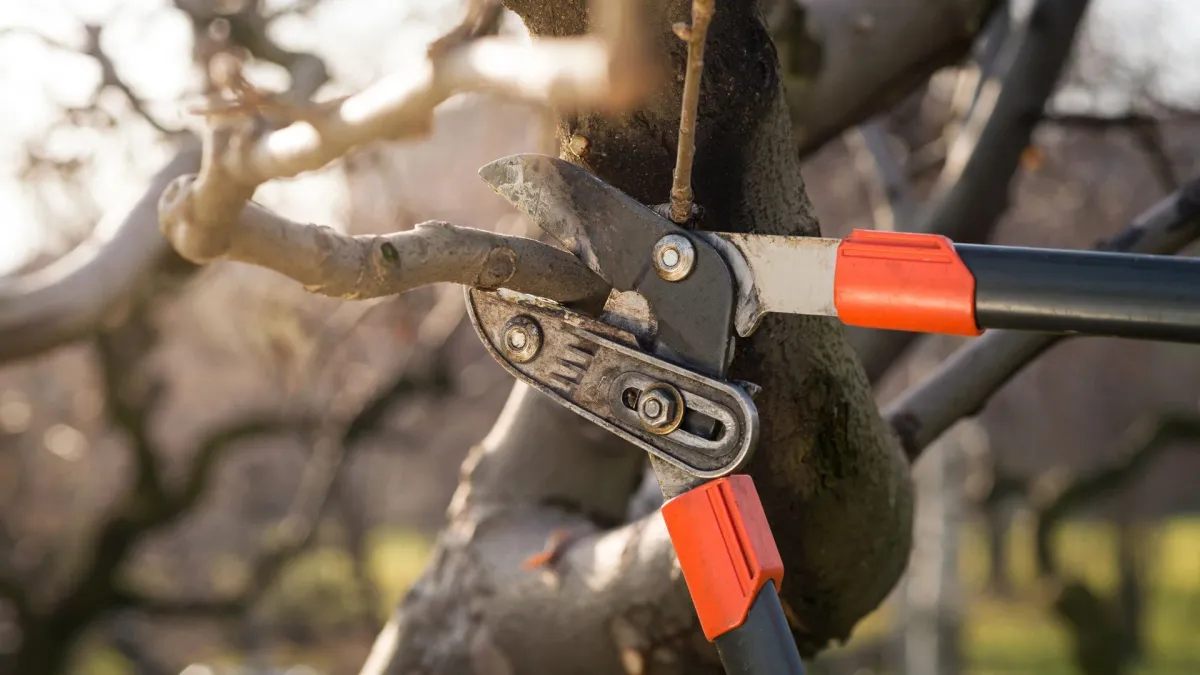
Cuts made with the wrong tool can do real damage. A dull blade crushes and tears the bark rather than slicing cleanly, leaving ragged wounds that heal slowly. A saw that is too small struggles with big limbs and leads to sloppy cuts.
Dirty tools are another risk. Pruning shears and saws can carry fungi and bacteria from one tree to the next, or from a diseased branch to a healthy one. Cleaning your tools between trees, and especially after cutting infected wood, helps limit the spread of disease.
Technique matters as well. For larger branches, arborists often use a three-cut method. The first cut is a small notch underneath, a short distance out from the trunk. The second cut is made from the top, farther out, to remove the weight of the limb. The final cut is made just outside the branch collar. This approach prevents the branch from tearing a strip of bark down the trunk as it falls, a type of damage that is hard for a tree to recover from.
Mistake 7: Using Wound Paint and Skipping Aftercare
Many people believe they should paint over pruning cuts with tar or sealant. It feels protective, almost like putting a bandage on a scrape. But current advice from most arborists is that wound dressings are not needed for most trees and can even trap moisture, which encourages decay. Trees heal by growing new tissue over the wound, a process called compartmentalization, and a clean cut at the right spot is the best help you can give.
Aftercare is more about the big picture. After trimming, keep an eye on watering during dry spells, spread mulch around the base to hold moisture, and avoid piling soil against the trunk. Do not apply heavy fertilizer right after pruning unless a professional recommends it. A calm, healthy tree recovers on its own.
Quick Reference: Mistakes and Better Choices
| Mistake | What It Does to the Tree | A Better Approach |
|---|---|---|
| Topping | Weakens structure, creates fragile sprouts, and invites rot. | Crown reduction by a professional. |
| Flush Cuts | Removes the branch collar and slows healing. | Cut just outside the branch collar. |
| Leaving Stubs | Stubs rot and spread decay. | Cut cleanly at the branch collar. |
| Over-Pruning | Drains energy and stresses the tree. | Remove limited amounts over time. |
| Wrong Timing | Raises the risk of disease, sap loss, or lost blooms. | Prune at the right time for the species. |
| Dull or Dirty Tools | Tears bark and spreads disease. | Use sharp, clean tools and proper cutting techniques. |
| Wound Paint and No Aftercare | Can trap moisture and delay recovery. | Use clean cuts, proper watering, and mulch. |
Warning Signs a Tree Was Trimmed Badly
If you are not sure whether a past trim caused harm, watch for signs the tree is struggling. You may notice
Thin or sparse leaves compared to previous years
Branches dying back from the tips
Clusters of weak, fast-growing shoots near old cuts
Peeling bark or large open wounds
Mushrooms or soft, spongy wood near the trunk or cuts
Leaves changing color or dropping early
A new lean or noticeable imbalance
One sign alone may have other causes, such as drought or pests. But several together, especially after heavy pruning, are a reason to have the tree looked at by a certified arborist or experienced tree care professional.
When to Call a Professional for Tree Trimming
Some light pruning, such as snipping small branches with hand pruners, is fine for most homeowners. But many jobs are better left to trained crews.
Call a pro if a branch is thicker than your arm, if you need a ladder or have to climb, if the tree is near power lines, or if the limb hangs over your home. Falling branches and chainsaws can cause serious injuries, and trees near utility lines are especially dangerous. You should never trim near power lines yourself.
Professional tree trimming services also bring knowledge that is hard to get from a how-to video. They can identify the species, judge its health, choose the right timing, and make cuts that protect the tree's long-term structure. They also carry the proper equipment and insurance.
Protecting Your Trees for the Long Run
Trees give shade, beauty, and value to your property, and they take decades to grow. Avoid the seven mistakes above, and you protect that investment. Make clean cuts at the collar, limit how much you remove, choose the right season, use sharp tools, skip the wound paint, and know when a job needs a professional.
So the next time you're staring at an overgrown branch and wondering whether to grab the saw, reach out to J. Medina’s Tree Service. We provide professional tree trimming services, backed by a team of experts that have spent years helping homeowners keep their trees healthy, safe, and looking their best.
Frequently Asked Questions
How often should trees be trimmed?
It depends on the species, age, and health of the tree. Many mature trees need attention every few years, while young trees may need light shaping more often.
What is the best time of year to trim a tree?
For many trees, late winter during dormancy is a good time. However, species and regional factors matter, such as oak wilt risks and spring-flowering trees.
Can a tree recover from topping?
Some can, but it is often damaged for life. Topped trees tend to grow weak, crowded shoots and are more prone to decay.
Should I use pruning sealer on cuts?
Usually no. Most arborists recommend against wound dressings, since they can trap moisture and slow natural healing. Clean cuts made at the proper location are the best protection.
How much can I safely remove from a tree?
A common guideline is to stay under about a quarter of the live crown in one season, and less for older or stressed trees. The right amount varies, so check with an arborist.

J. Medina’s Tree Service has served Montgomery and surrounding areas for over 20 years, bringing practical experience and professional equipment to tree work of all sizes.
Contact
Phone:
(630) 405-8809
Email:
[email protected]
Service Areas:
Serving the greater metropolitan area with rapid emergency response.


